
Computer Science Assignments: From Concept to Implementation
Computer science education operates through practical application. Lectures introduce algorithms, data structures, and computational theory, but genuine understanding develops through implementation. Assignments translate abstract knowledge into functioning systems, requiring students to navigate the gap between conceptual comprehension and technical execution.
This guide examines the primary assignment types in computer science curricula and offers strategies for approaching each successfully.
Programming Assignments
What they involve: Writing source code to solve specified problems, implement algorithms, or build functional applications. These range from short scripts demonstrating specific techniques to substantial projects requiring modular architecture and multiple classes or functions.
Core challenges: Syntax precision, logical correctness, efficiency optimization, and edge case handling. A program that functions for standard inputs may fail catastrophically with unexpected data.
Practical strategies:
- Decompose specifications into discrete functional requirements before coding
- Design test cases covering normal operation, boundary conditions, and invalid inputs
- Implement incrementally, verifying each component before integration
- Version control all work, committing functional states at regular intervals
- Document code with comments explaining purpose and non-obvious logic
Common deficiencies include inadequate input validation, hardcoded values that should be parameters, and failure to handle resource cleanup properly.
Algorithm Analysis Assignments
What they involve: Evaluating computational complexity, proving correctness, and comparing algorithmic approaches. Students analyze time and space requirements using Big-O notation, demonstrate termination properties, and establish optimality bounds.
Core challenges: Abstract reasoning about asymptotic behavior, rigorous proof construction, and distinguishing best-case, average-case, and worst-case scenarios.
Practical strategies:
- Trace algorithm execution manually with small examples before formal analysis
- Identify elementary operations that dominate the runtime
- Consider how the input structure affects performance characteristics
- Use mathematical induction for correctness proofs
- Verify intuitive conclusions against formal definitions
Precision matters. Loose reasoning about complexity leads to incorrect conclusions about scalability.
Data Structure Implementation
What they involve: Building fundamental structures—lists, trees, graphs, hash tables—from basic components rather than using library implementations. Students must manage memory allocation, pointer manipulation, and dynamic resizing.
Core challenges: Memory management, pointer arithmetic, ensuring structural invariants, and optimizing access patterns for specific operations.
Practical strategies:
- Draw structure diagrams before implementing pointer logic
- Maintain invariants rigorously; document assumptions explicitly
- Implement traversal, insertion, deletion, and search operations systematically
- Test with structures of varying size and configuration
- Profile memory usage to identify leaks or inefficient allocation
These assignments develop a foundational understanding that library abstraction otherwise obscures.
Database Design Assignments
What they involve: Constructing relational schemas, normalizing data structures, writing SQL queries, and sometimes implementing application layers that interact with database systems.
Core challenges: Entity-relationship modeling, ensuring referential integrity, optimizing query performance through indexing, and balancing normalization against practical access patterns.
Practical strategies:
- Model entities and relationships completely before schema implementation
- Apply normalization systematically through the third normal form unless denormalization is justified
- Write queries using explicit joins rather than relying on implicit Cartesian products
- Test with datasets large enough to reveal performance limitations
- Implement transaction handling for multi-step operations
Poor schema design propagates problems throughout application development.
System Architecture Assignments
What they involve: Designing software systems with multiple interacting components, specifying interfaces, and often implementing concurrent or distributed elements.
Core challenges: Modular decomposition, interface definition, handling race conditions, ensuring consistency across distributed nodes, and managing failure scenarios.
Practical strategies:
- Define component responsibilities clearly; minimize coupling
- Specify interfaces with precise contracts for inputs, outputs, and error conditions
- Model concurrent access to shared resources explicitly
- Design for failure; implement retry logic and graceful degradation
- Document architectural decisions and their rationales
These assignments simulate professional software engineering practice.
Theoretical Problem Sets
What they involve: Formal proofs, logical derivations, and analytical solutions to problems in computability, complexity theory, or discrete mathematics.
Core challenges: Rigorous logical reasoning, appropriate proof techniques, and clear mathematical communication.
Practical strategies:
- State assumptions and definitions explicitly
- Structure proofs logically, with each step following necessarily from previous steps or established theorems
- Distinguish constructive proofs from existence proofs
- Check boundary cases and edge conditions
- Review solutions for logical gaps or unstated assumptions
Mathematical precision distinguishes valid arguments from plausible but incomplete reasoning.
Collaborative Project Work
What they involve: Team-based development of substantial software systems, often with specified roles, deliverables, and integration requirements.
Core challenges: Coordination, interface agreement, version control management, integration testing, and equitable contribution.
Practical strategies:
- Establish explicit specifications for component interfaces before implementation begins
- Use collaborative development platforms with issue tracking
- Schedule regular integration points to identify conflicts early
- Document individual contributions for evaluation purposes
- Establish communication protocols for blocking issues
Professional software development is collaborative; these assignments develop essential teamwork capabilities.
FAQ
How do I manage time when programming assignments take unpredictable hours?
Decompose assignments into estimated subtasks. Allocate specific time blocks. When encountering persistent obstacles, switch to alternative components rather than remaining stuck. Seek assistance after defined effort thresholds.
Is it acceptable to use online resources for coding solutions?
Reference documentation, language specifications, and algorithm explanations are appropriate. Complete solutions to specific assignment problems are not. Cite adapted code segments and ensure you understand their operation fully.
What should I do when my program compiles but produces incorrect output?
Trace execution systematically. Insert output statements or use debugging tools to examine variable states at key points. Isolate the first point where actual behavior diverges from expected behavior. Verify assumptions about data types, operator precedence, and control flow.
How do I balance code efficiency with readability?
Prioritize correctness and clarity initially. Optimize only when profiling identifies genuine performance bottlenecks. Document intentional optimizations and their measured impacts.
What if my implementation works on my development environment but fails on the submission platform?
Test in environments matching the submission system. Eliminate dependencies on specific operating system features, library versions, or file paths. Containerization can help replicate target environments locally.
How do I demonstrate understanding when the assignment permits library implementations?
Explain the selection rationale. Discuss trade-offs between alternative approaches. Analyze complexity characteristics. Extend functionality beyond basic requirements thoughtfully.
For specialized assistance with computer science assignments, professional support is available through OZessay help with computer science assignments.
Final Word
Computer science assignments develop capabilities that extend far beyond specific technologies. They cultivate analytical decomposition, systematic debugging, precise communication, and collaborative coordination—skills that remain relevant as technologies evolve. Approach this work with methodical discipline, and you build foundations for sustained professional competence in a rapidly changing field.

Related Posts
Discussion Board Posts: Participating in Digital Academic Discourse
Sociology Papers: Reading Society Through a Disciplinary Lens
College Paper Types: A Practical Guide for Student Writers

How to Remove Wallpaper – Steamer, Liquid Solvent, and Fabric Softener Methods

Can You Paint Over Wallpaper?

How to Make a Live Wallpaper on Your Android Device

How to Change Wallpaper on Chromebook
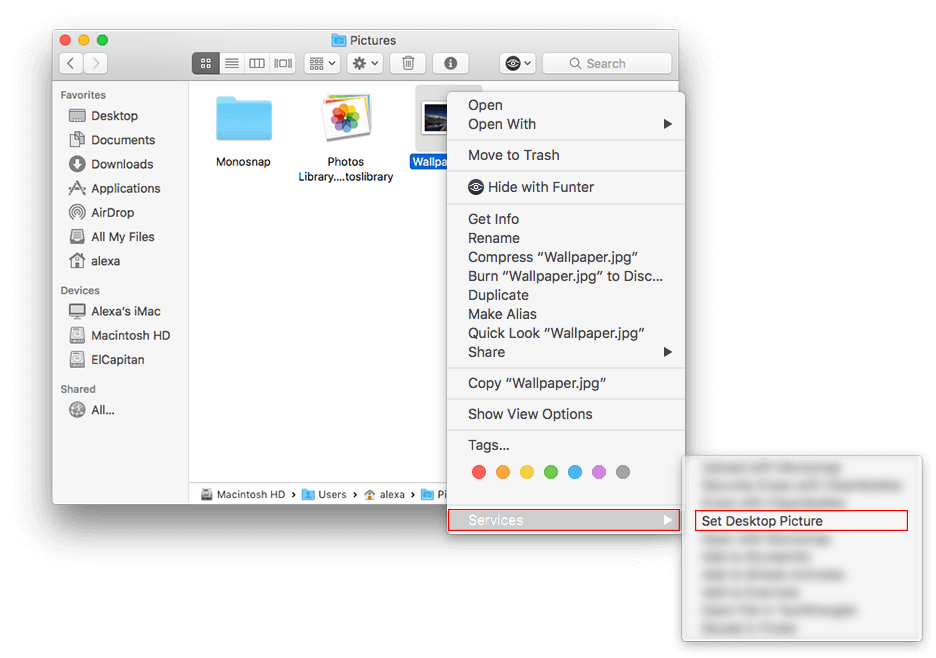
How to Change Wallpaper on Mac

Don’t Touch My Phone!